SIMONE SBARBATI - BORDER-LINE INFORMATION
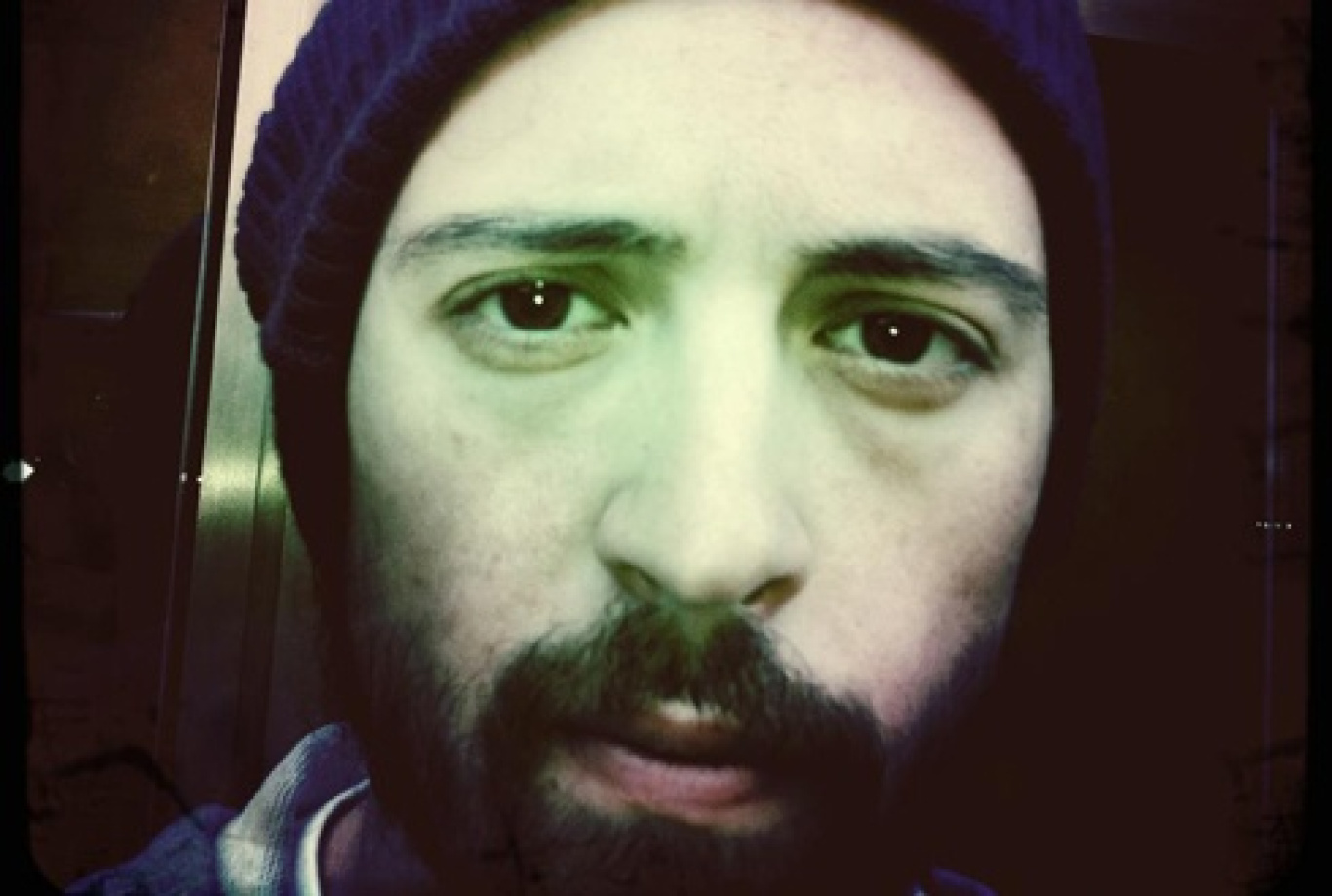
Simone Sbarbati and her "Frizzifrizzi" are often referred to as a good example to disprove the prejudices, but also the negative opinions, which often strike the world of bloggers and blog, in particular those dealing with fashion. The key of all is the credibility that this online magazine, as it is defined by most people, has built for itself by reserving a position on the web where it is able to express its original point of view on things, but also aware of a precise function as a personal and alternative information place. It is difficult to define Simone Sbarbati and his work, better then to discover his “borderline” thoughts and try to understand them better.
From "Freshcut Magazine" to "Frizzifrizzi" your work has always been on the network, which, as you wrote about on "Grazia.it", is a flow of information within which we are all rowing without a coxswain: how to avoid getting lost?
Relying on someone who, even if he doesn’t have the helm in hand, tries to suggest the route. Some people do it by yelling to be heard amid the digital uproar and others, instead, like friends, will take on the side and give you tips on what they think might interest you: that's what we try to do with "Frizzifrizzi" . And just like us many online magazines that carefully select the content and do not take the copy/paste shortcut.
In the same article you wrote that "the Italian lifestyle is ‘rolling up your sleeves and use your hands’", in times of crisis more than ever one needs to give concrete form to own creative projects? Is it an opportunity for young people?
I think that recently the discussion around the ... discussion, practically everything which is the meta-communication of a product has reached a quantitative level (which has gone to obscure the qualitative one) as to overshadow the reality of a project. I see it in my work, for example: in a year I receive thousands of press releases and reports that strive in every way to attract the attention with a long discussion on the concept - when there is a concept to communicate – without mentioning the practical aspect of the product they are trying to “sell” and that in turn I will have to "sell" to the readers. But when there is little or nothing to say at the conceptual level, then press offices, designers, creative people of every sector package everything in a shining container - that may be the same packaging as well as photos of a campaign, a video-lookbook, a viral, the face of a celebrity - who is expected to become the Trojan Horse used to get a company name on your magazine. Fortunately we are seeing the return of the "know how", of the matter and functions which take the upper hand on lifestyle and everything around it, good only for the PR and the press offices. See for example the last Pitti. The only gripe is that this return to the matter, if in some cases is true, in many others is just though in some cases is true, in many others it is just fashion. The nth.
The disclaimer box of "Frizzifrizzi" presents it as a blog, but it’s enough to visit a few to notice the differences, not surprisingly it is defined as a magazine. Can you define this difference visible but not canonical?
In fact, the structure, in a reverse chronological order, is still that of a blog, just like the platform, Wordpress, whose use was intended for blogging, the same that is used in the vast majority of small and medium size dynamic websites around today. We decided to gradually abandon the definition of blogs to get away from the drifts which in Italy, because of some very bad example and in particular the press who first mounted the phenomenon and then destroyed it with cynicism a little later, the term ‘bloggers’ brings with it. Together with our friends and colleagues of Bobos.it we hold a course on "fashion blogging", on how fashion should be, but we have understood that we need to change the name because most of them, without first understanding, perceive the opposite of what we try to teach, that is, reading, learning how to do research, writing from a personal and original point of view and (as I always say: if you are sincere you will never be afraid to have competitors because there will never be anyone like you more than yourself). Returning to "Frizzifrizzi", with the introduction of many sections, insights, special sections, and especially with the new layout of the site we are now perceived primarily as an online magazine. But, as for writing, at least for me, the diary dimension, intimate, remains.
You pay much attention to the design world, in less than a month there will be the Salone del Mobile, what do you expect to see?
In fact, if we consider the design product, it really doesn’t have that much space on "Frizzifrizzi". The design understood in a broad sense, as culture of the project, instead, is our priority. The Salone del Mobile is a wonderful opportunity to see and experience the design dimension in all its forms, with a city, Milan, which opens fully to the public and from area to area focuses its attention on every possible intersection with the Design capital D and any other creative practice. What I expect from this show, following on from earlier remarks, is a greater attention to the matter and function, as well as an enhancement of craftsmanship and, in the case of industrial products, the spotlight on the possibility of personalization, also extreme , by the customer.
You defined yourself as a former aspiring photographer, do you think that communities like Flickr or applications like Instagram have transformed the world of photography and can still do it?
Certainly they have forever changed the world of photography, whether positively or not it depends on which side you look at the phenomenon. For professionals I think in negative, given that social networks dedicated to photography have increased the competition for amateurs and offered a vision that, together with cost reductions of mid-level digital equipment, they immediately became a huge pool of amateurs ( which of course are invested by all the benefits of the phenomenon), people capable of shooting for editorial, lookbooks and visual material to be used not only in the network. Consequently, even for editors and companies - especially those emerging - being able to have a huge archive like Flickr where discover new talents is certainly positive, although there are phenomena of real exploitation by big companies rather than pay fair compensation to artists and advertisers using in bad faith formulas such as creative contests to find themselves in his hands so much material at no cost, or nearly so, for advertising campaigns. Furthermore, the fairness and neutrality of platforms such as Flickr, Behance or 500px risk prejudicing the real talent if on the other side of the screen there is an untrained eye, and without the "aesthetic compass" necessary to orientate in the middle of a virtually endless offer. Regarding Instagram, is undoubtedly one of the social applications that together with Pinterest is having the greatest growth in recent times, also because it offers everyone the opportunity to make "pretty pictures" in any condition and with a poor equipment as the camera of a smartphone. On my part, when I find myself along with my members to select young talents to promote through "Frizzifrizzi”, I do not even take into account those who have a portfolio full of pictures taken with Instagram or similar, since the possibility of making interesting photos "to leave out of consideration" I find it misleading when assessing the actual capabilities of a photographer. The fact remains that for a manual diary it is definitely a godsend, see also the fact that I sent you the photos I took with Instagram, indeed.
Andrea Vigneri